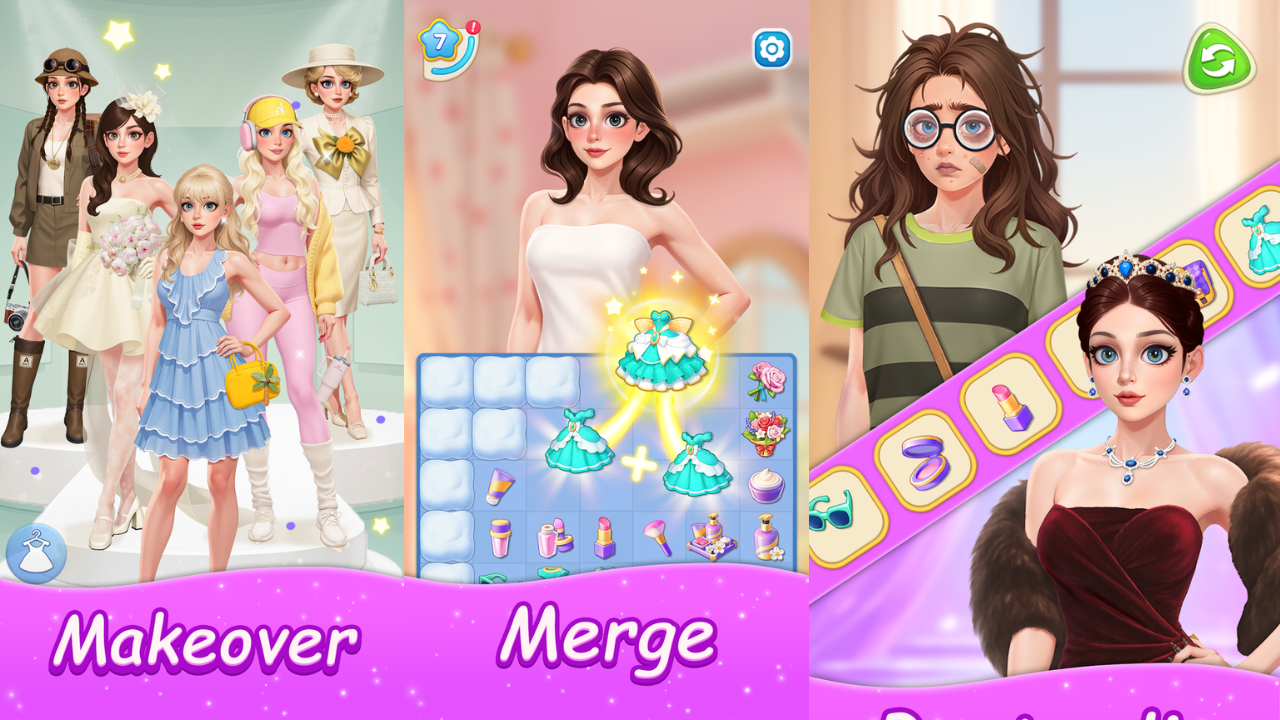
The long-awaited cheat/hack for Merge Fashion is finally here! Let’s all get free Merge Fashion Energy, Gems, Coins! Everyone’s obsessed with Merge Fashion!
So I keep playing. Not because I'm unaware of the clock, but because I've learned to budget it — spending Energy like a miser, Coins like a pragmatist, and Gems like a sniper saving one bullet for the shot that actually matters. It's a strange thing to say about a pastel merge game with a romance subplot, but Merge Fashion taught me more about my own spending impulses than most finance apps ever have. Every generator tap is a small lesson in scarcity, every order a negotiation between now and later. That the lessons arrive wrapped in sequins and a love story about a fashion studio is either the game's greatest generosity or its cleverest sleight of hand. After all these months, I genuinely can't tell the difference — and honestly, that's the most honest review I can give.
Gems can also be useful for dealing with difficult item chains. Some orders require a long sequence of combinations, and the final stage may depend on several lower-level objects. If you are one step away from completing an important order, spending a small amount of premium currency may feel worthwhile. If you are only beginning the chain, however, it is usually better to wait and use natural Energy recovery.
Another smart use for Gems is improving convenience. Depending on the current version of the game, premium currency may be connected to storage, special offers, or useful board assistance. These upgrades can provide longer-term value because they make every future session easier. A permanent convenience improvement is generally more valuable than a one-time impulse purchase.
I would avoid spending Gems on anything that does not create visible progress. A shiny offer is not necessarily a good offer. Before using premium currency, ask three questions: Will this complete an active order? Will it unlock a story or makeover milestone? Will it help me reach a limited-time reward before the event ends? If the answer to all three is no, saving the Gems is probably the better choice.
The game’s in-app purchase structure reinforces the importance of Gems. The App Store listing displays several Gem packs and other paid bundles, including starter offers, small and large Gem packs, and energy-related purchases. That does not automatically make the game unfair, but it does show that the resource economy is designed to support optional spending.
There is nothing wrong with spending money on a game if you understand what you are buying. The important thing is recognizing that Gems do not transform Merge Fashion into a different game. They mostly reduce waiting, provide shortcuts, or smooth over difficult moments. The underlying merge loop remains the same.
My personal rule would be to treat Gems like emergency funds. Keep them for events, major story pushes, or genuinely difficult bottlenecks. Do not use them every time the Energy bar reaches zero. Waiting may be less exciting, but it allows the game to remain playable without turning every short session into a purchase decision.
Coins Pay for Story Progress
Coins are the most visible connection between the merge board and the romance storyline. Completing customer orders typically rewards Coins, and those Coins are then used to advance scenes, pay for actions, complete tasks, or unlock elements of Alice’s transformation. In other words, Coins turn your puzzle work into narrative progress.
This connection gives the game its strongest sense of purpose. Without the story, merging could become a repetitive exercise in producing increasingly complicated fashion objects. Coins provide a reason to keep completing orders. You are not only making a handbag or combining cosmetics; you are working toward the next scene, makeover, or chapter.
The official game overview describes Merge Fashion as a title where players merge items, complete orders, earn progress, improve Alice’s look, and open the next story scene. That structure is important because it explains why Coins feel different from Gems. Coins are the normal reward for participating in the game, while Gems are generally associated with shortcuts and premium decisions.
Coins are used for more than simply unlocking dialogue. They may be required for makeover actions, clothing changes, room improvements, story decisions, or practical tasks that appear during the narrative. The result is a constant cycle: spend Energy to produce items, merge those items to complete orders, collect Coins, and use the Coins to push Alice’s life forward.
I liked this connection when the story and the task felt related. Completing a fashion order and then using the reward to improve Alice’s appearance creates a satisfying sense of cause and effect. The board is not isolated from the narrative. What happens in the merge area directly affects the character’s world.
The weaker moments appear when Coin costs feel disconnected from the actual work required. If an order takes a long time to complete but produces only a small amount of story progress, the economy can feel slow. The player may spend several minutes managing generators and board space, only to find that the reward disappears after one or two story actions.
This can create the impression that the game is stretching its content. Some players may enjoy the slow pace, particularly if they prefer a casual mobile experience. Others may feel that they are repeatedly performing the same chores simply to unlock a brief scene.
The best way to manage Coins is to avoid spending them automatically. When several story tasks are available, consider which one is most likely to unlock a meaningful scene, new area, new generator, or useful feature. If the game presents optional improvements alongside story-critical objectives, prioritize the objective that keeps the main progression moving.
Coins are also easier to manage when you avoid overproducing items. It is tempting to create everything on the board simply because you have enough Energy, but the game rewards focus more than activity. Completing the right orders is more valuable than generating a large pile of unrelated fashion pieces.
The story itself is a matter of taste. Merge Fashion uses familiar romance-drama ingredients: betrayal, transformation, a mysterious CEO, new relationships, hidden secrets, and social pressure. The App Store description presents Alice’s journey as a comeback story following betrayal by her boyfriend and a sudden marriage proposal from a mysterious CEO.
At its best, the story gives emotional context to the economy. Coins become more meaningful when they help Alice regain confidence, change her appearance, improve her surroundings, or confront people from her past. At its weakest, the story can feel like a reward screen placed between repetitive orders.
Still, I found the Coin system more satisfying than a simple level counter. It provides a visible reason to care about completing orders. Even when the merge process becomes repetitive, the possibility of a new outfit or story beat gives the next task a little more importance.
The Three Resources Together
Energy, Gems, and Coins are not separate systems. They form a chain. Energy allows you to create items. Items are merged to complete orders. Orders provide Coins and other rewards. Coins unlock story and makeover progress. Gems sit above the system as a way to accelerate, supplement, or bypass parts of the process.
Understanding that chain makes the game easier to play. Energy is about action. Coins are about progression. Gems are about flexibility and speed.
Energy should usually be spent on orders that produce Coins or advance active objectives. Coins should be reserved for the story and upgrades that create meaningful progress. Gems should be used only when they save a substantial amount of time or help secure a valuable reward.
The most efficient player is not necessarily the player who merges the fastest. It is the player who wastes the fewest actions. A rushed session can consume Energy while producing a messy board and very little useful progress. A slower session, built around one or two clear orders, can accomplish more with the same number of taps.